Facet Flow
Facet Flow aims to give custom jewelers the most efficient workflow, from creating their pieces and managing custom orders to standardizing pricing and production. As the lead product designer, I collaborated with the founders to design the three core components of its product: the AI-assisted custom jewelry-designing chatbot, the customer-facing jewelry designer, and the jeweler-facing back-end management system.
Timeline: May 2025 - Present (Ongoing)
Role: Product Designer
Tools: Figma
PROBLEMS & OPPORTUNITIES
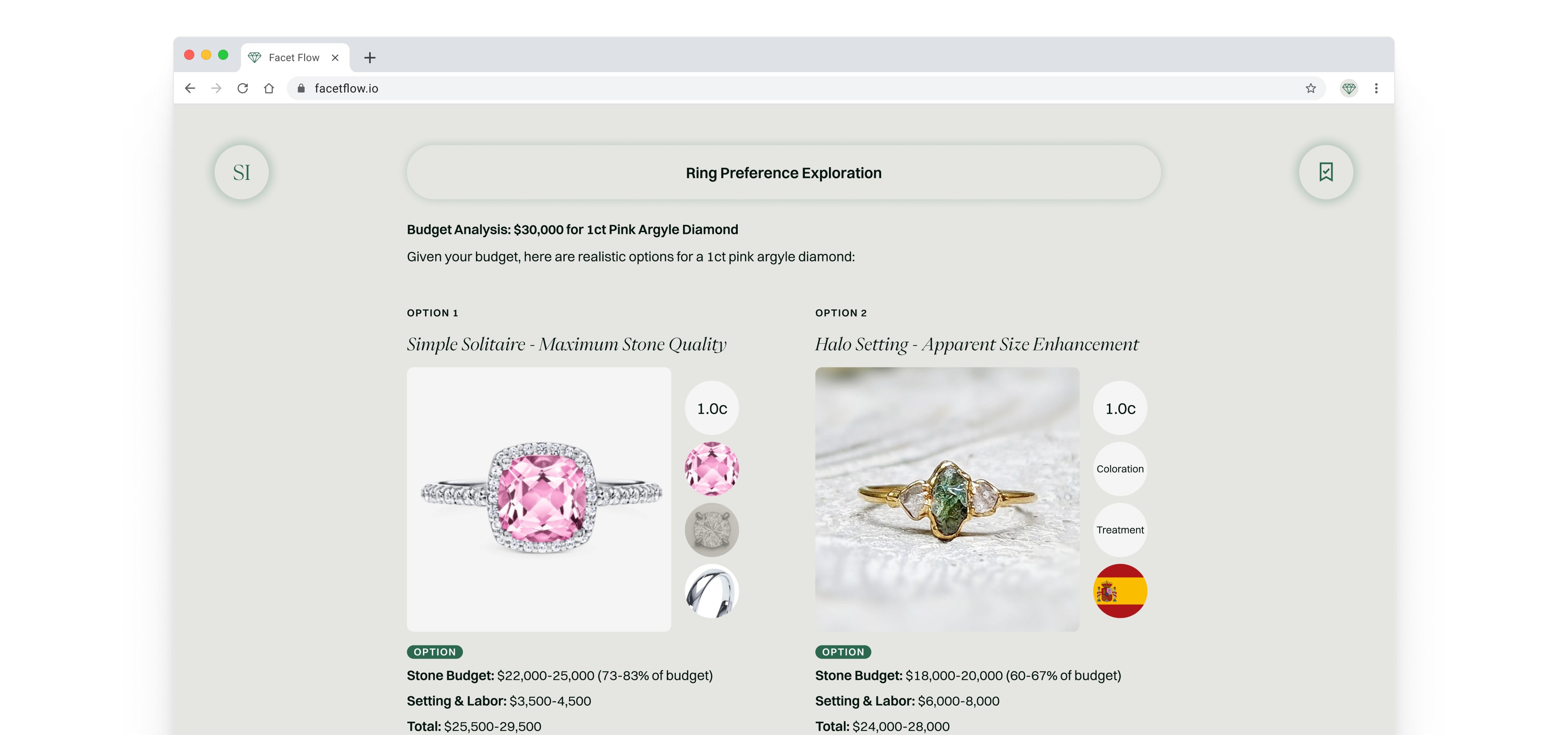
Design pivoted from the initial MVP, a ring building & customer management software, to create a specialized jewelry-focused AI chatbot to respond to the immediate user needs: onboarding internal teams on jeweler-specific data, quickly building and visualizing mockup rings, and gemstone sourcing.
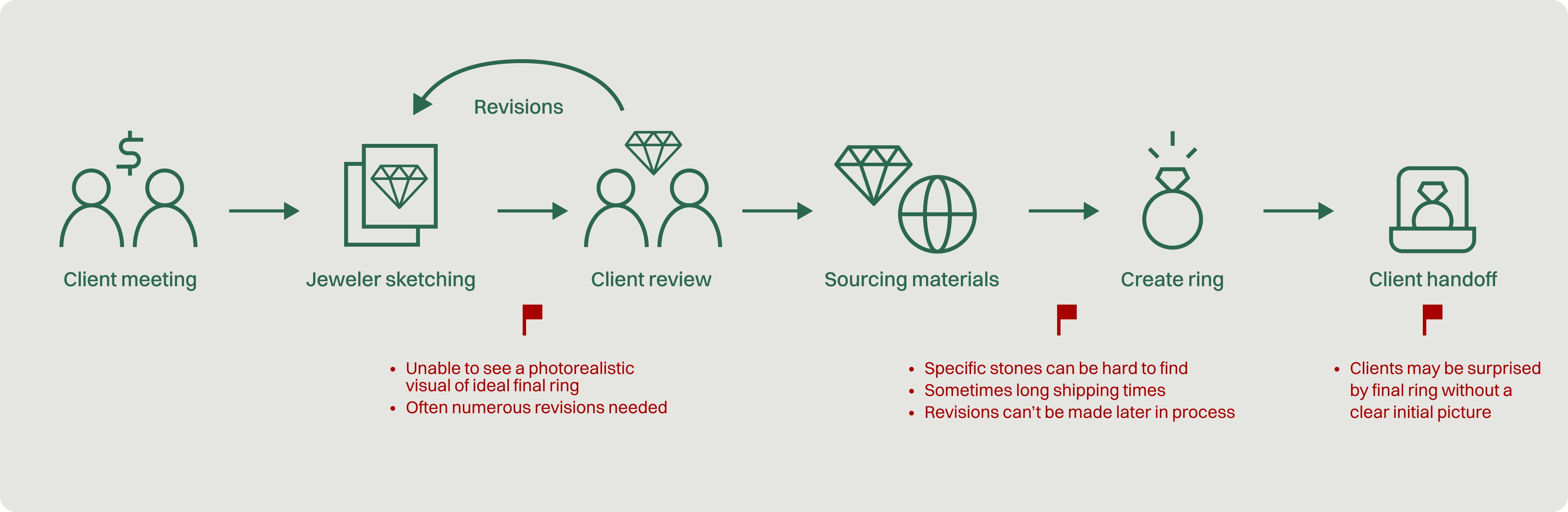
Based on the needs of the first round of users, which consisted of individual jewelers and their small teams, we realized a major paint point was the time--the time it took to create simple mockups, source gemstones with specific carats and certifications, and pull and calculate pricing data with labor and material costs.
With this data only uploaded and set once in the beginning, the chatbot is then able to reference, pull, and generate anything jewelers may need in an instant.
MVP
The core problem Facet Flow solves is the complexity of jewelers' workflows in creating rings for customers.
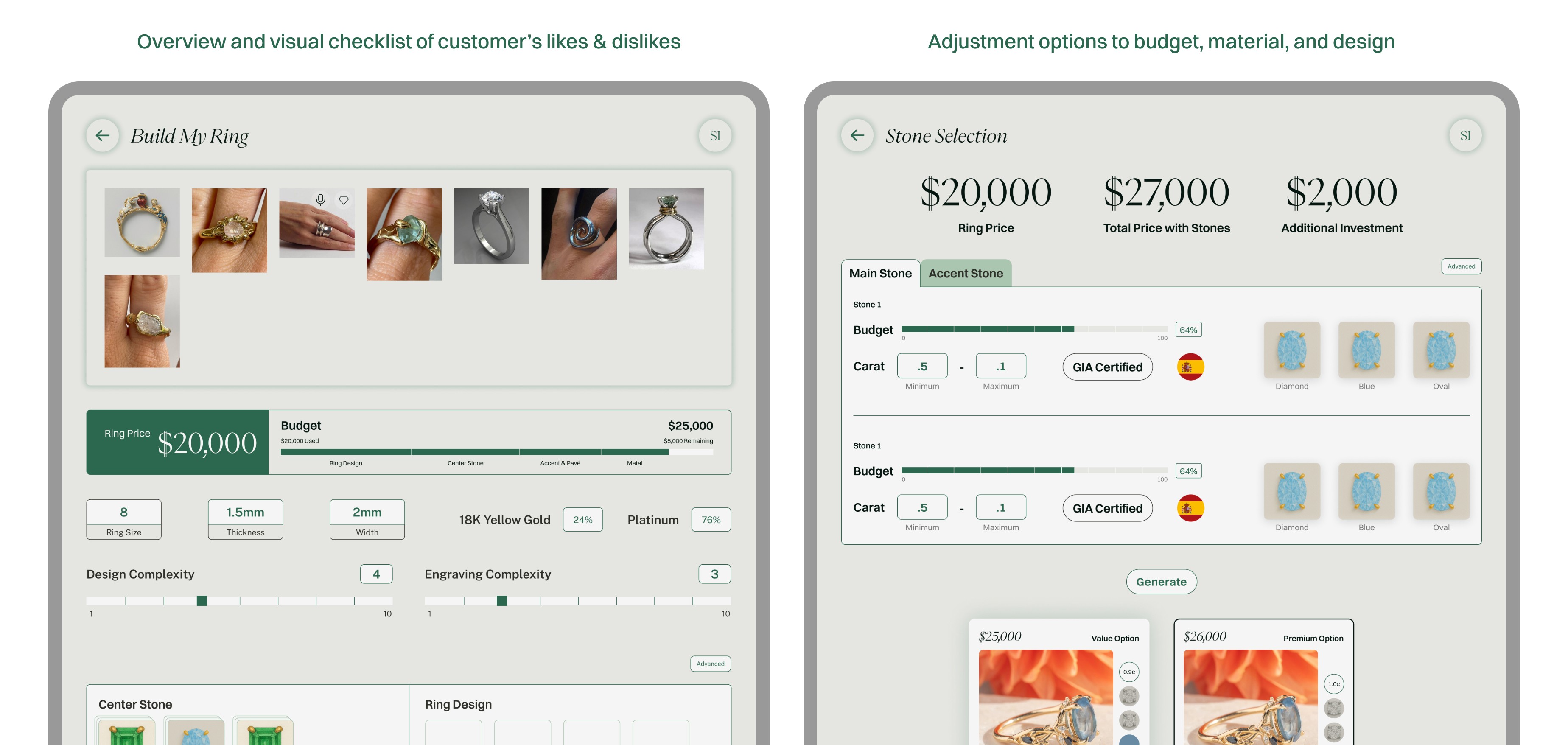
The rings jewelers create for people are always symbolic and carry deep meaning for their wearers, whether for an engagement or a memento of a loved one. Additionally, they work at a high price point, from $10,000 minimum to upwards of $100,000. This produces a need for an empathetic, personable, experience for the customer, and an optimized process for the jeweler both in terms of workflow and minimizing errors; a single carat of change can be incredibly costly.
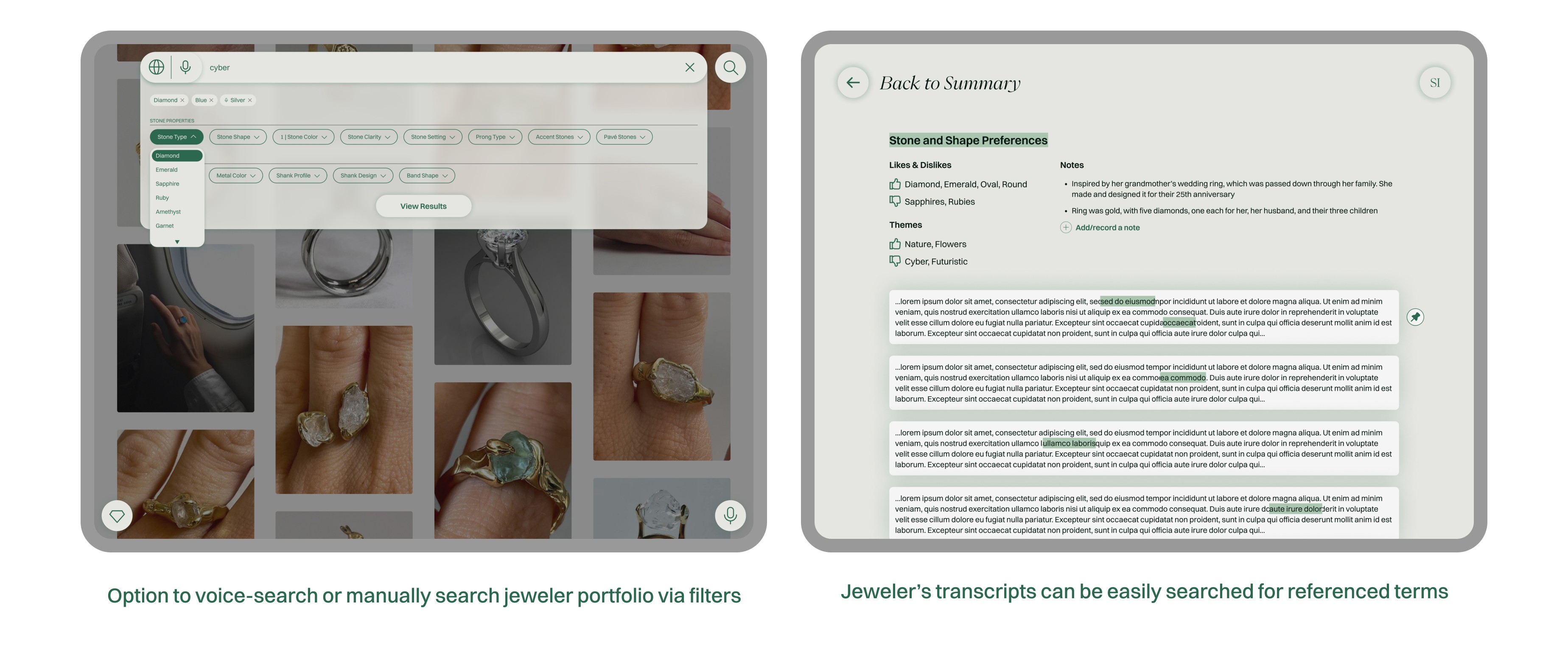
Due to the individualistic nature & story of each ring and customer, so to create a seamless experience for the customer to tell their story, voice recording and transcript generation is a major component. The customer can fluidly speak about their story and likes & dislikes as the jeweler controls the interface, also serving as helpful note-taking for the jeweler to refer back to later; the experience flows more as a conversation rather than just a transaction.
CURRENT PERSONAL LEARNINGS
With this project, what helped me the most was definitely gaining a deep understanding of jewelers' processes and therefore pain points. Even in an accelerated, startup environment, informal journey mapping helped immensely with understanding problem prioritization and what steps success could be measured at.